
Sidewalk Shed After an Unsafe Parapet Finding in NYC
In this article
An Unsafe parapet finding means a sidewalk shed goes up — but how long it stays up, and what it ultimately costs you, is largely in your control. Here's the DOB removal path, step by step, so you know exactly what to do next.
The Shed Is a Cost Meter You Control
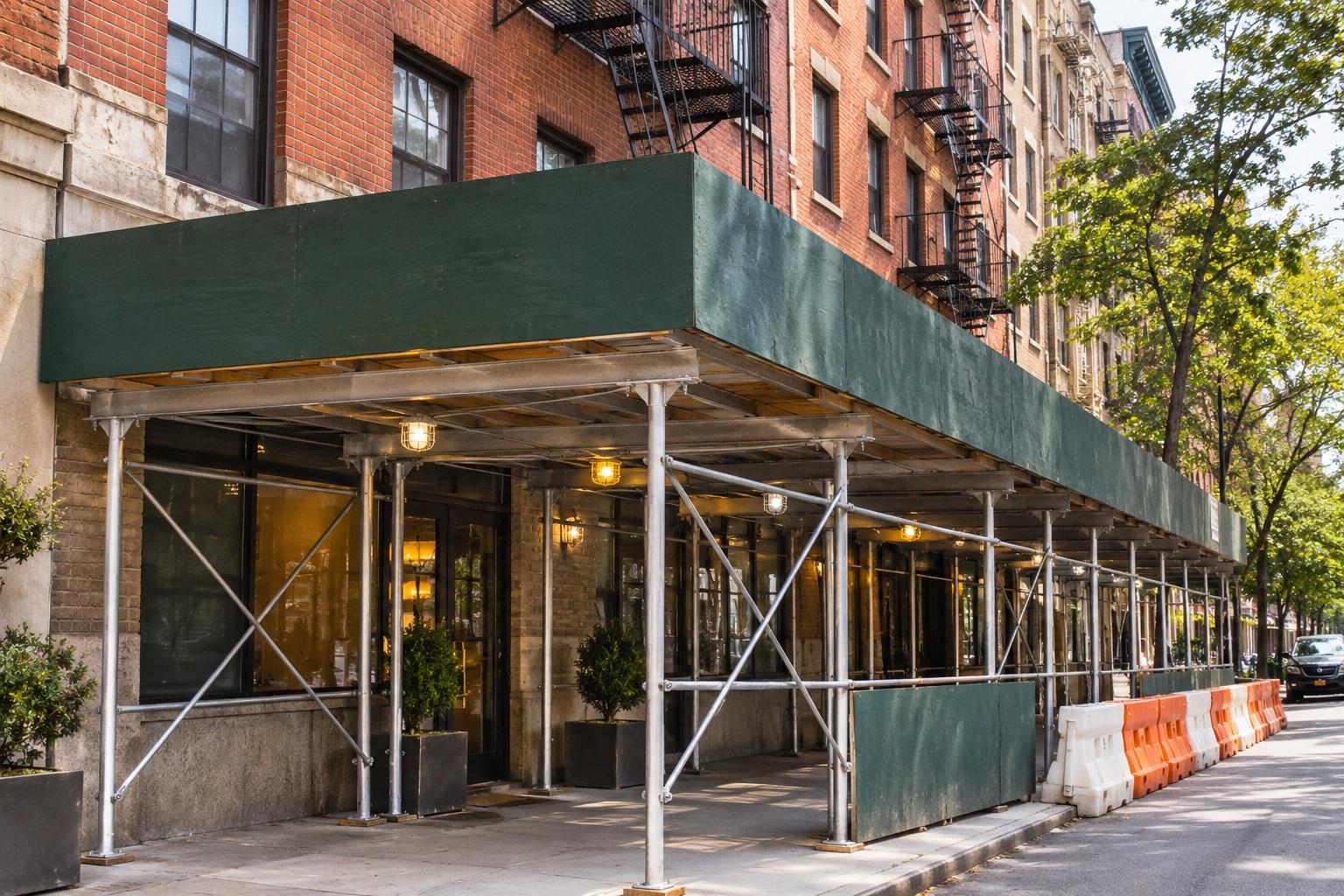
If your Local Law 126 parapet report comes back marked Unsafe, one of the first things that happens is a sidewalk shed appears at your building. For many NYC owners and co-op boards, that shed feels like a punishment — a bulky, scaffolded verdict that everyone walking past can see. But it helps to reframe what the shed actually is.
A sidewalk shed is not a fixed penalty. It's a meter. It carries a recurring monthly charge that keeps running until the shed comes down, and it comes down only when you've moved through a defined sequence of steps with the Department of Buildings (DOB). In other words, the shed stays up roughly as long as you let it. Every idle month — every week spent deliberating, waiting on a contractor, or re-filing a bounced report — is money.
That's the good news hidden inside a stressful situation. Because the timeline is largely in your hands, understanding the process is the single best thing you can do to compress it.
At VetraCheck, we inspect parapets and facades across all five boroughs, and we work inside the DOB system every day. This piece lays out, in plain English, the real cost drivers behind sidewalk shed requirements for an NYC parapet, the exact DOB workflow that gets the shed removed, and the specific levers that determine whether yours comes down in weeks or drags on for months. Nothing here is legal or engineering advice on your specific building — findings and obligations always depend on your parapet, your frontage, and your DOB record — but by the end you'll know precisely what to do next.
Why an Unsafe Parapet Finding Puts a Shed on Your Sidewalk
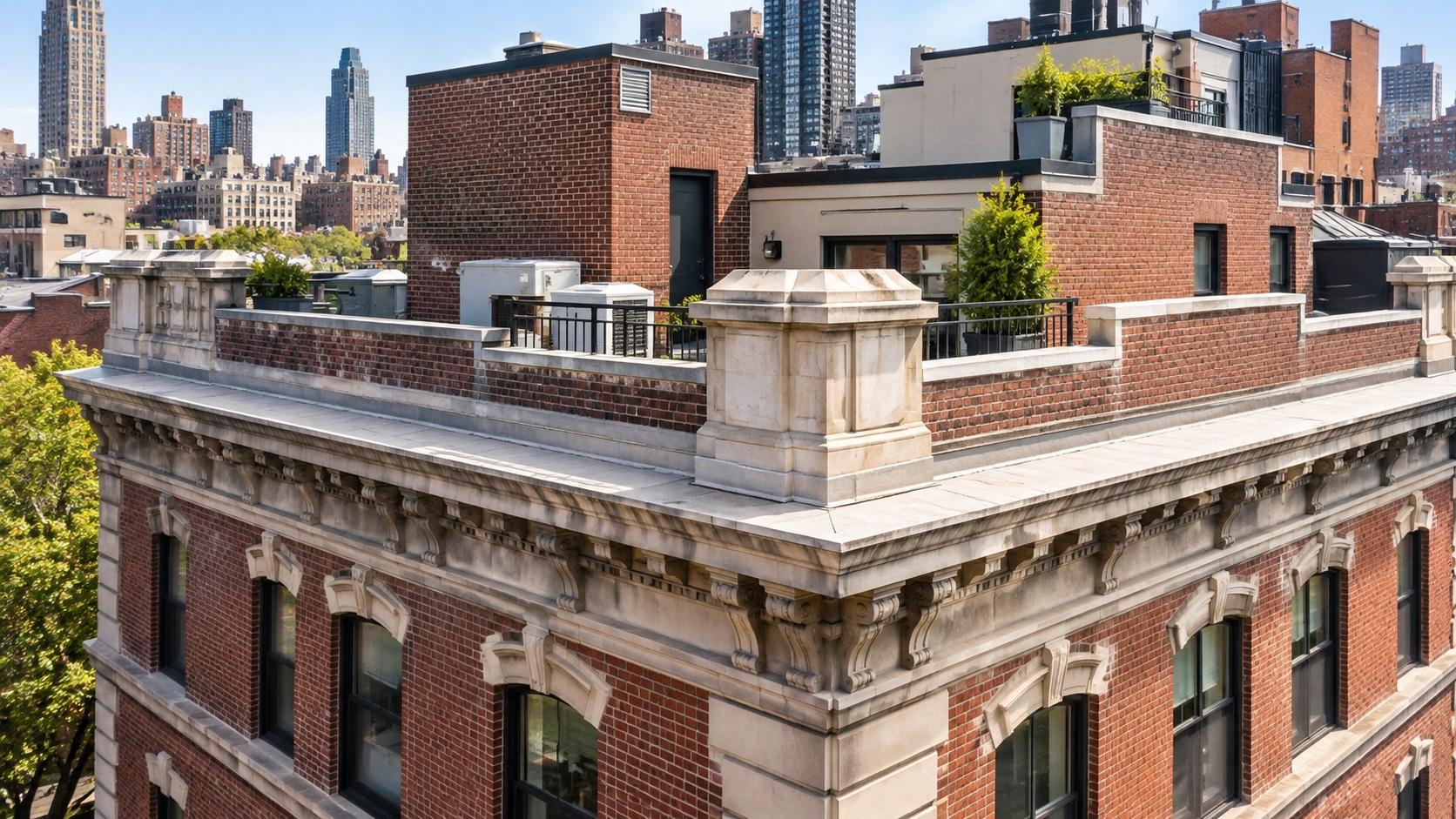
Under Local Law 126 and the governing rule, 1 RCNY §103-15, every applicable building's parapet (the low wall running along the roof edge) must be observed and classified on an annual basis. The inspecting professional reports the parapet as Safe, SWARMP (Safe With a Repair and Maintenance Program), or Unsafe. Those three words carry very different consequences.
An Unsafe classification means the professional has identified a condition that poses a present danger — loose masonry, displaced coping (the protective cap along the top of the wall), deteriorated anchorage, or similar deterioration serious enough that falling material could endanger people below. When a parapet fronts a public right-of-way, an Unsafe finding triggers two immediate obligations: the condition must be reported to the DOB without delay, and pedestrian protection— typically a sidewalk shed, and sometimes a fence or other barrier — must be put in place to shield people on the sidewalk from potential falling debris.
It's important to be precise here: the exact protection required is condition-dependent. Not every Unsafe finding produces an identical response, because the parapet height, the building's street exposure, the width of the sidewalk, and the nature of the defect all factor in. That judgment belongs to a licensed engineer or architect assessing your specific building, not to a rule of thumb. This is one reason self-diagnosis is risky: the difference between "we'll monitor it" and "we need pedestrian protection today" is exactly the kind of call a qualified professional is trained and licensed to make.
Unsafe vs. SWARMP — Why Only One Triggers the Shed
Here's a distinction that saves owners real money: a SWARMP designation does not carry the same immediate pedestrian-protection obligation that an Unsafe finding does.
SWARMP means the parapet is safe right now but has conditions that need to be addressed within a defined repair-and-maintenance window to keep it that way. It's a warning light, not an alarm bell. You get time to plan the work, schedule a contractor, and budget — without a shed eating into your reserves every month. An Unsafe finding, by contrast, means the clock and the costs start immediately.
If you want the full breakdown of how these classifications differ and what each one obligates you to do, we've covered it in detail in our guide to how Unsafe differs from a SWARMP designation.
The sobering reality is that the gap between SWARMP and Unsafe is often just one deferred inspection. A parapet flagged SWARMP one year — and then ignored — can slide into Unsafe territory the next, especially in NYC's freeze-thaw climate. That's a thread we'll pick back up at the end, because the cheapest shed is the one you never have to rent.
The Shed and the 90-Day Repair Clock
An Unsafe finding also starts a 90-day repair obligation under the governing rules. You're expected to correct the condition within that window. But there's a nuance owners frequently get wrong, so let's be exact about it: the 90-day clock governs repairs, not shed removal.
In practice, the shed typically stays up across — and often beyond — that 90-day window. It remains in place until the repairs are completed, the parapet is re-inspected and certified as corrected, and the filing is cleared with the DOB. The shed doesn't come down the moment your mason finishes the last course of brick; it comes down when the paperwork closes the loop.
We walk through what that repair period actually looks like, and the deadlines around it, in our breakdown of the 90-day repair clock after an Unsafe finding. Understanding the difference between the repair deadline and the removal workflow is the foundation for everything that follows.
What Actually Drives Sidewalk Shed Cost in NYC
Owners always ask the same first question: What is this going to cost me? We can't quote fixed dollar figures here — shed pricing moves with the market, the vendor, and the specifics of your building — but we can tell you honestly what drives the number, so you can judge an estimate when you see one.
The single most useful thing to understand is that shed cost comes in two parts: a one-time setup cost to install (and later dismantle) the structure, and an ongoing monthly rental charge for as long as it stands. People tend to focus on the install number and underestimate the rental — which, as we'll see, is usually where the real money goes.
Installation Cost Drivers
Several factors shape the up-front installation cost:
- Linear footage of frontage. The longer the stretch of sidewalk that needs protection, the more shed you're paying to build. A narrow townhouse frontage and a full-block commercial building are different animals entirely.
- Building and parapet height. Taller buildings may require greater clearance and heavier structural design for the shed to meet DOB standards, which raises material and labor costs.
- Corner conditions. A building that wraps a corner needs protection on two frontages, often with more complex geometry at the turn.
- Access and scaffold complexity. If the site involves tricky access, obstructions, loading zones, or needs to coordinate with scaffolding for the actual repair work, costs climb.
- DOB permit fees. The shed requires its own permit, and those fees are part of the total.
Borough and street type matter, too. A busy Manhattan commercial frontage — high pedestrian volume, tight curb space, demanding logistics — generally carries different costs and constraints than a quieter residential block in Brooklyn, Queens, Staten Island, or the Bronx. None of this is national boilerplate; it's the practical reality of installing a protective structure on a New York City sidewalk under DOB oversight.
The Recurring-Cost Trap — Sheds Are Rented, Not Bought
Here is the point every owner should internalize: you don't buy a sidewalk shed — you rent it. The shed carries a monthly charge that accrues, month after month, until the day it's removed. Time is the true expense.
This completely reframes the "inspections are too expensive" objection. The cost of a thorough inspection and a clean filing is modest and predictable. The cost of a shed that lingers for six, nine, or twelve months because repairs stalled, re-inspection was slow, or a DOB filing bounced back? That's where budgets get blown.
Every delay compounds into rental months:
- Slow to start the repairs → rental months.
- Repairs finished, but no one scheduled the re-inspection → more rental months.
- Filing submitted with incomplete documentation, so the DOB kicks it back → still more rental months.
The owner's pace sets the bill. That's not a threat — it's leverage. Once you understand that the meter runs on your timeline, you can move deliberately to shut it off.
DOB Requirements for the Shed Itself
A sidewalk shed isn't just dropped at the curb and forgotten. It's a permitted structure with its own DOB requirements, and the responsibility for keeping it compliant sits with you, the owner.
The shed needs its own DOB permit, and that permit has to be kept current. While the shed is up, owners carry ongoing obligations to maintain it in safe, code-compliant condition. In practical terms, that generally includes keeping the structure sound and well-maintained, ensuring required lighting underneath is functioning so the covered walkway stays safe at night, and displaying the required signage and permit information. These aren't optional niceties; they're part of staying compliant for the duration.
None of this is especially burdensome if the shed goes up and comes down on a reasonable timeline. It becomes a headache only when the structure lingers — which is yet another reason to treat removal as a priority rather than letting the shed become part of the scenery.
What Happens If a Shed Sits Too Long
A sidewalk shed that sits for an extended period can become its own liability. An aging or neglected shed — dim lighting, damaged panels, faded signage, an expired permit — can invite complaints from tenants and neighbors, draw additional DOB scrutiny, and create new obligations on top of the parapet condition you were trying to resolve in the first place.
We're not raising this to alarm anyone. Most sheds are perfectly routine. The point is simply practical: carrying an open Unsafe condition and a visible protective structure on a NYC sidewalk is an active responsibility, not a passive one. The longer it stays, the more surface area there is for something to go sideways. Removal speed isn't just about saving rental dollars — it's about closing out an open obligation cleanly.
The Exact DOB Workflow to Get the Shed Down
This is the part anxious owners come looking for: How do I actually get this thing off my sidewalk? The workflow is a clear, fixed sequence. Learn it, because knowing the steps is what lets you move through them quickly.
The crucial thing to understand up front: re-inspection and a clean DOB filing are the gating steps. Finishing the physical repairs is necessary but not sufficient. The shed doesn't come down because the work is done; it comes down because the record is closed. Here's the path.
Step 1 — Complete the Repairs
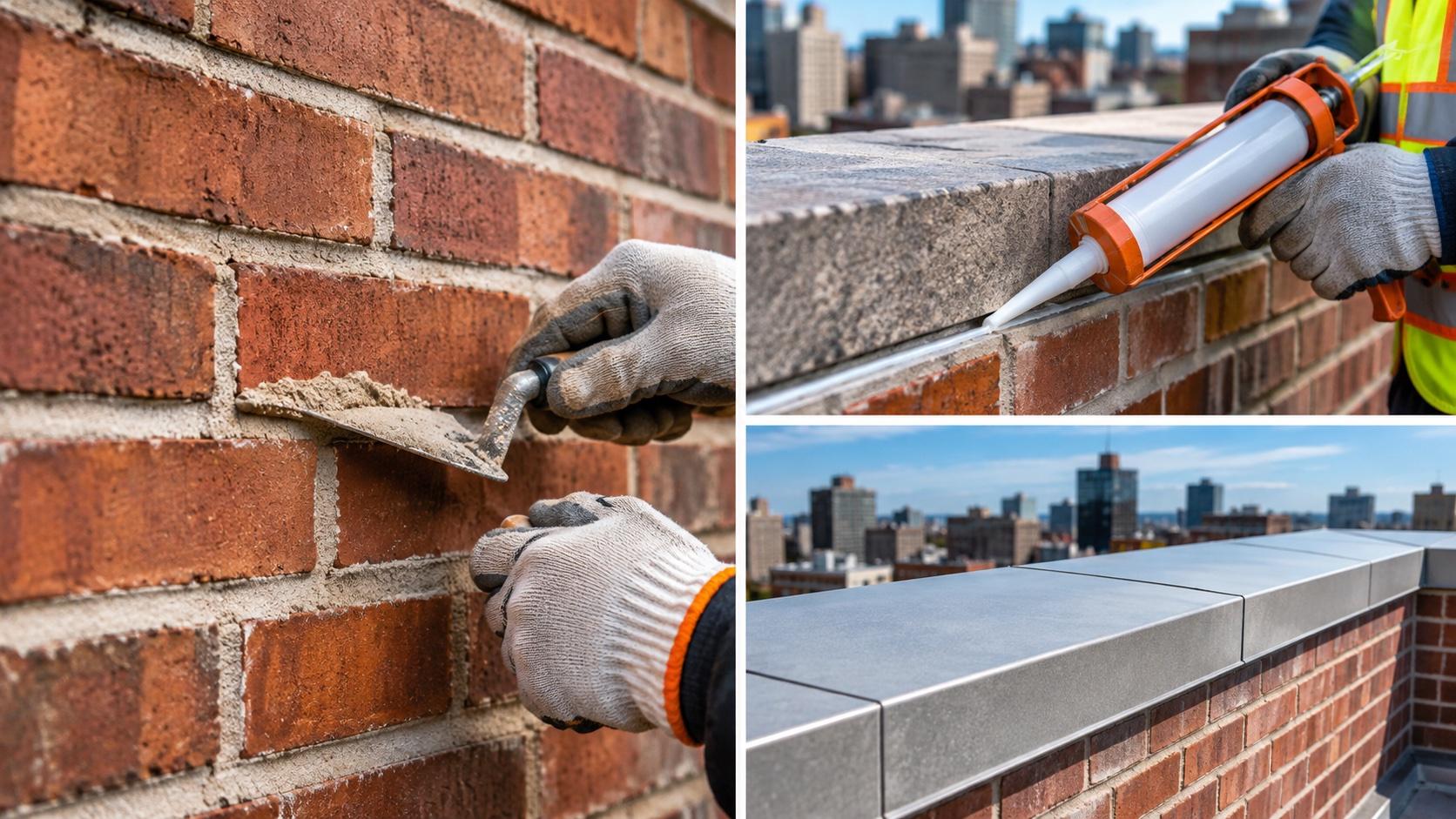
A qualified contractor corrects the Unsafe condition identified in your parapet report. The scope depends entirely on your specific parapet and the findings — it might be repointing deteriorated mortar (replacing the worn material between the bricks), resetting or replacing coping stones, addressing corroded anchors, or more extensive rebuilding where the deterioration runs deep. The report tells the contractor what has to be fixed; the parapet itself dictates how involved the fix will be.
Step 2 — Re-Inspection and Certification
This is the step owners most often underestimate. Once repairs are complete, a licensed engineer or architect must re-inspect the parapet and certify that the condition has been corrected. Your contractor's word that the work is done doesn't close the file — a qualified professional has to verify it.
Owners who don't plan for this step get stuck: the mason packs up, everyone assumes the ordeal is over, and then weeks pass while no one lines up the re-inspection. Meanwhile, the shed is still metering. Scheduling the re-inspection before repairs wrap is one of the simplest ways to save yourself a month.
Step 3 — Amended / Final Filing to the DOB
With the corrected condition certified, the professional files to reclassify the parapet and close out the record with the DOB. This is paperwork, but it's consequential paperwork. Filing errors, missing photos, or incomplete documentation cause bounce-backs — and every bounce-back restarts the wait while the shed keeps charging you.
A filing that's complete, properly documented, and correctly classified the first time is worth real money here, because it moves through DOB processing without the back-and-forth that keeps sheds standing.
Step 4 — Permit Close-Out and Shed Removal
Once the filing clears and the shed permit is closed out, the shed can finally come down. The dismantling itself is quick; getting to this point is the whole game.
A fair word of caution, and a guardrail we take seriously: exact timing depends on your building, the nature of the condition, the contractor's schedule, and DOB processing times, which none of us fully control. We can't promise a specific number of days. What we can say is that owners who execute these four steps tightly — without idle gaps between them — consistently get their sheds down faster than owners who let each step drift.
Specific Levers to Get the Shed Down Faster
The workflow is fixed. The pace is not. These are the concrete levers that separate a shed that's up for a couple of months from one that haunts your sidewalk for most of a year.
Act Immediately on the Unsafe Finding
Don't let the shed sit while you deliberate. The week the report lands marked Unsafe is the week to build your plan — not next quarter, not after the next board meeting. Every month of hesitation is a rental month you'll never get back. Treat the finding as the start of a sprint, not the beginning of a slow conversation.
Line Up a Qualified Contractor Early
Contractor availability is one of the most common sources of delay in NYC, especially during the busy repair seasons when sheds and scaffolds are in heavy demand across the boroughs. Start sourcing and scheduling a qualified contractor early — even before the repair scope is fully nailed down. Getting a capable crew into your queue early can shave weeks off the overall timeline.
Use One Firm for Fast Re-Inspection and DOB-Ready Filing
This is the single strongest compression lever: work with a firm that re-inspects promptly and files clean, DOB-ready reports. The back-and-forth between separate parties — one to inspect, another to interpret, a third to file — is where timelines bleed. A firm that handles re-inspection and the filing as one tight process eliminates the gaps where sheds quietly rack up months of rent.
This is exactly where VetraCheck is built to help. Our NYC DOB-certified engineers and architects deliver DOB-ready reports in three to five business days, which means the certification-and-filing stretch of the workflow — the part that so often stalls — moves quickly and cleanly. Fast, accurate reporting is the difference between a shed that comes down on schedule and one that lingers.
Avoid the Filing Errors That Bounce Back
Incomplete photos, a misclassified condition, or gaps in the documentation will send a filing back and restart the clock. This is unglamorous, but it's where a lot of avoidable delay lives. Professional, DOB-ready reporting — complete, properly classified, and thoroughly documented the first time — is what keeps your filing moving forward instead of boomeranging back to your inbox. When the meter is running, "right the first time" is worth far more than it looks.
Pre-War Buildings — Why Older Parapets Keep Sheds Up Longer
NYC's older building stock deserves a special note, because pre-war parapets tend to keep sheds up longer. Across the five boroughs, these buildings share a set of common vulnerabilities: soft lime mortar that has weakened over a century of weather, freeze-thaw damage that cracks and displaces masonry as water expands and contracts through our winters, and rusted steel anchors that lose their grip on the brick they were meant to hold.
When a pre-war parapet fails, the repair is often more extensive than a quick patch. Rebuilding a section of deteriorated parapet, replacing failed anchorage, or addressing widespread mortar loss takes longer than a minor correction — and a longer repair cycle means a longer shed duration and more recurring cost. The more deteriorated the condition, the longer the repair-and-recertify loop runs.
That reality is the strongest possible argument for catching problems early. A pre-war parapet inspected on a regular annual cadence gives you the chance to address soft mortar and loosening anchors while the work is still manageable — before freeze-thaw turns a maintenance item into an emergency. We've detailed the specific failure modes to watch for in our guide to common parapet problems in pre-war NYC buildings, which is worth a read if you own or manage older stock anywhere from the Upper West Side to Bay Ridge to the Grand Concourse.
The Best Way to Avoid a Shed Entirely — Inspect Before It Becomes Unsafe
Let's reframe the whole discussion one last time, forward this time. The surest way to never pay for a sidewalk shed is to never receive an Unsafe finding in the first place — and that's more within reach than most owners realize.
The key is catching a parapet at the SWARMP stage, before deferred maintenance and NYC's freeze-thaw cycle push it over the line into Unsafe. SWARMP gives you a planning window. It lets you schedule repairs on your terms, budget deliberately, and address deterioration without a shed metering away in the background. The parapet that would have become an emergency next winter becomes, instead, a line item on a predictable maintenance plan.
That's what a proactive annual Local Law 126 inspection routine delivers: early detection, organized records (DOB requires that parapet inspection reports be retained for six years), and renewal reminders that keep you ahead of the curve instead of reacting to a crisis.
What a Proactive Annual Inspection Buys You
A consistent annual inspection buys you three things that matter to any busy owner or board: peace of mind, predictable costs, and no surprise sidewalk shed. It turns compliance from a recurring source of anxiety into something closer to "set it and forget it" — the inspection happens on schedule, the records are kept, and you always know exactly where your building stands.
And that last point is the honest caveat we'll always offer: findings and obligations depend entirely on your specific building. We can't tell you from here whether your parapet is Safe, SWARMP, or Unsafe. A professional inspection is precisely how you find out — before the freeze-thaw cycle makes the decision for you.
Key Takeaways
- An Unsafe parapet finding under Local Law 126 and 1 RCNY §103-15 triggers immediate DOB notification and, where a public right-of-way is at risk, a sidewalk shed or other pedestrian protection. A SWARMP finding does not.
- The shed is a recurring monthly cost, not a one-time fee — so time is the real expense, and the owner's pace sets the bill.
- The 90-day clock governs repairs, not shed removal. The shed comes down only after the record is cleared.
- Shed removal follows a fixed DOB path: complete repairs → re-inspection and certification → clean, amended filing → permit close-out and removal.
- The owner controls the pace. Acting immediately, lining up a contractor early, using one firm for fast re-inspection and DOB-ready filing, and avoiding filing errors all compress the timeline.
- Proactive annual inspections are the cheapest way to avoid a shed altogether — catch problems at SWARMP, before they become Unsafe.
Don't Let the Meter Run
Whether you're staring at an Unsafe finding right now or simply want to make sure you never see one, the fastest path forward is the same: a prompt, accurate, DOB-ready inspection and filing from licensed professionals who work inside the NYC system every day.
VetraCheck's NYC DOB-certified engineers and architects have completed thousands of inspections across all five boroughs, maintain a 100% compliance rate, and deliver DOB-ready reports in three to five business days with transparent pricing and no hidden fees — whether your parapet is in Manhattan, Brooklyn, Queens, the Bronx, or on Staten Island. If a shed is already up, we can move quickly through the re-inspection and filing that gets it down. If it isn't, we can help you stay that way.
Schedule a fast, DOB-ready parapet inspection or request a quote today. The sooner you start, the sooner the meter stops.
Official sources
- Parapets, NYC Department of Buildings
- Parapets: Frequently Asked Questions, NYC Department of Buildings
- 1 RCNY §103-15 (parapet observation rule), NYC Department of Buildings
- 1 RCNY §102-01 (penalty schedule), NYC Department of Buildings
Published by VetraCheck Inc., a New York City inspection firm. About VetraCheck
Keep reading

Need a Local Law 126 parapet inspection?
Licensed NYC engineers, dated photos, and a report in three to five business days, on file before December 31.
Parapet inspections in Manhattan, Brooklyn, Queens, The Bronx, Staten Island