
NYC Building Compliance Deadlines: One Master Calendar for LL126, FISP, LL97 & LL33
In this article
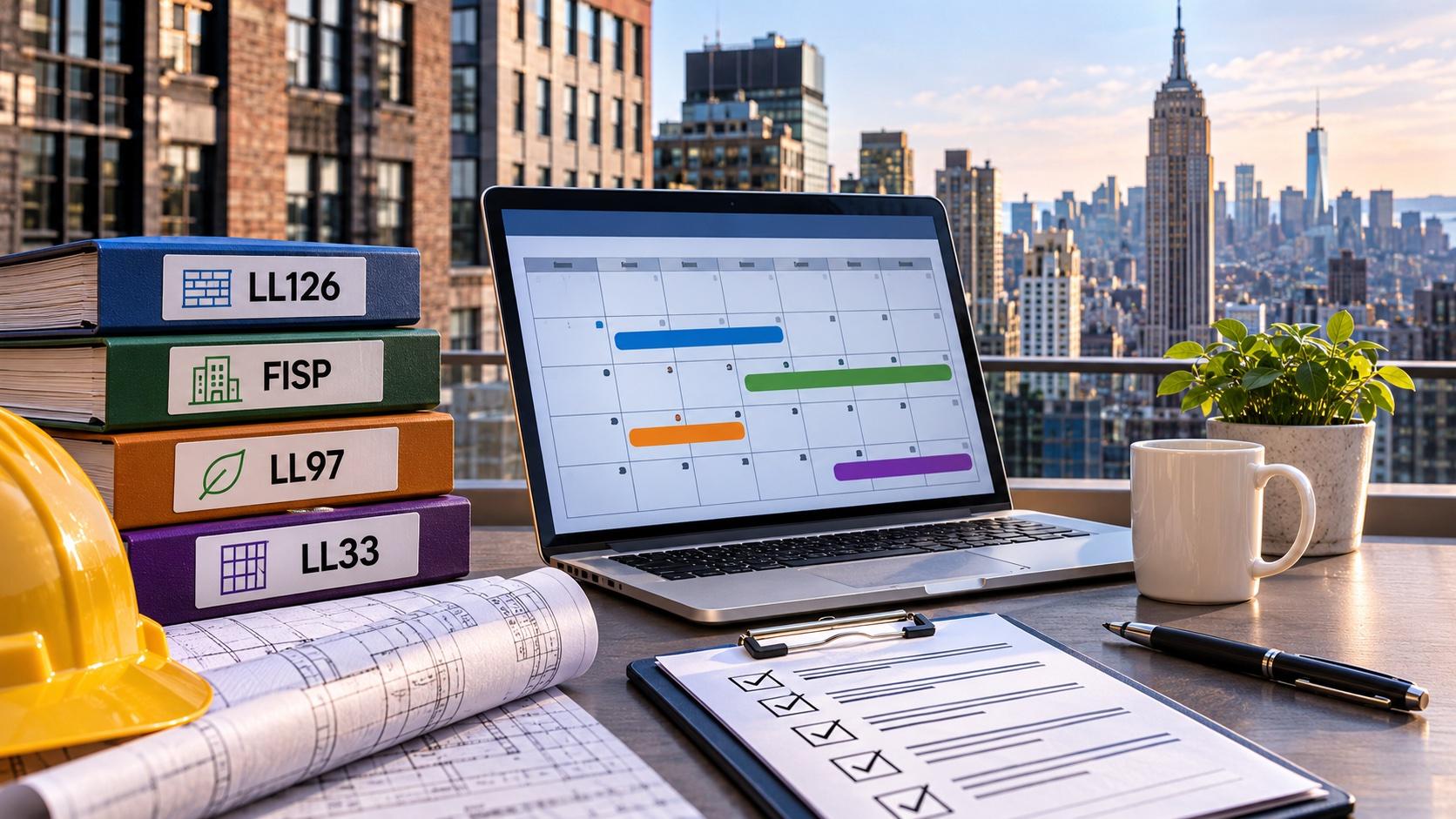
Here is the quiet trap built into NYC building compliance deadlines: there isn't one deadline. There is no single master date you can circle on the calendar, prepare for, and relax about once it passes. Instead, every major facade and building law runs on its own independent clock — different triggers, different cycles, different filing windows — which means a well-run building with a diligent owner can still get blindsided by a requirement it didn't realize had come due.
That's not a failure of attention. It's a structural problem. You might have your annual parapet inspection dialed in and still miss a five-year facade filing window, because the two obligations have nothing to do with each other. You might be flawless on emissions reporting and overlook the energy grade you're supposed to post by your front door. The laws don't coordinate with each other, so the burden of coordinating them falls entirely on you.
This guide is built to fix that. Think of it as a command center — an evergreen framework for reading the overlapping cycles that govern NYC buildings and assembling them into one calendar you actually control. We're deliberately not handing you a dated list that expires in twelve months. Dates shift, sub-cycles get reassigned, and the Department of Buildings (DOB) periodically updates its schedules. What doesn't change is the underlying logic of how these laws work — and once you understand that, a "set it and forget it" compliance routine becomes genuinely achievable.
Below, we'll walk through each of the four laws most owners juggle — Local Law 126, FISP (Local Law 11), Local Law 97, and Local Law 33 — then map them onto a month-by-month view and give you a simple system for pinning down your building's actual dates. The goal isn't to alarm you. It's peace of mind through organization.
One note before we start: this article is a planning tool, not legal or engineering advice. Applicability and obligations vary building by building, so treat everything here as a framework to verify against your own property and the DOB's current schedule.
The Overlap Problem: Four Laws, Four Different Clocks
The reason this is hard is worth stating plainly, because understanding it is half the battle.
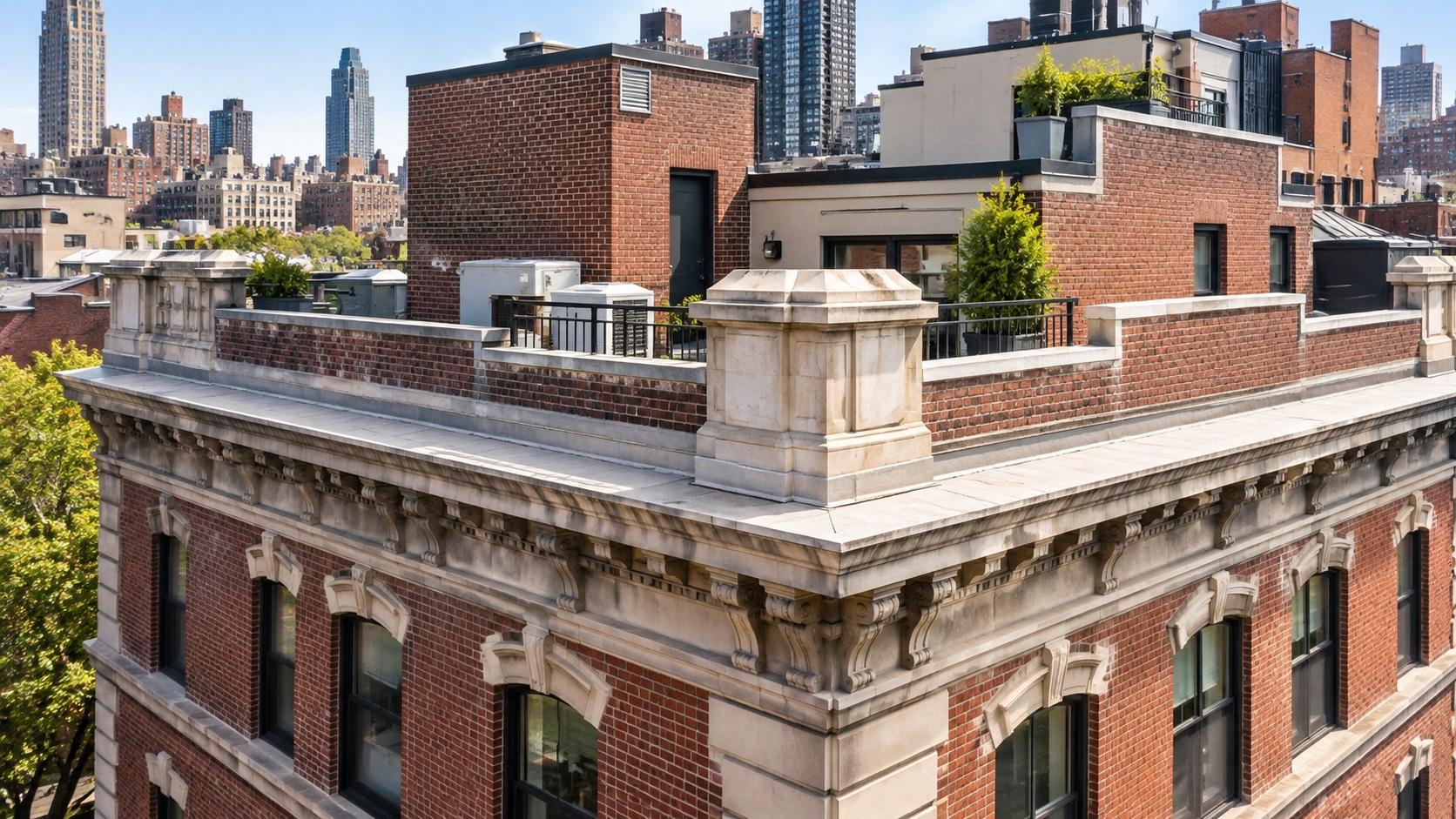
Local Law 126 is annual. Buildings with parapets fronting a public right-of-way must have those parapets observed every single year. A parapet is simply the low wall that extends above the roofline at a building's edge. There's no multi-year breathing room here.
FISP (Local Law 11) runs on a five-year cycle, and that cycle is itself split into staggered sub-cycles, with filing windows assigned building by building. Two buildings on the same street can owe their facade filings years apart.
Local Law 97 is annual emissions reporting — a yearly accounting of a building's carbon emissions — set against a backdrop of multi-year compliance periods with tightening limits. The report recurs yearly; the stakes behind it escalate over time.
Local Law 33 is tied to benchmarking and posting. Benchmarking means measuring your building's energy and water use and reporting it; that data produces a score, the score becomes a letter grade, and that grade has to be physically posted near your entrance.
Four laws, four fundamentally different rhythms. And because each one is triggered by different building characteristics — height, parapet presence, square footage — no two buildings owe the exact same mix of obligations. Your neighbor's compliance calendar is not yours.
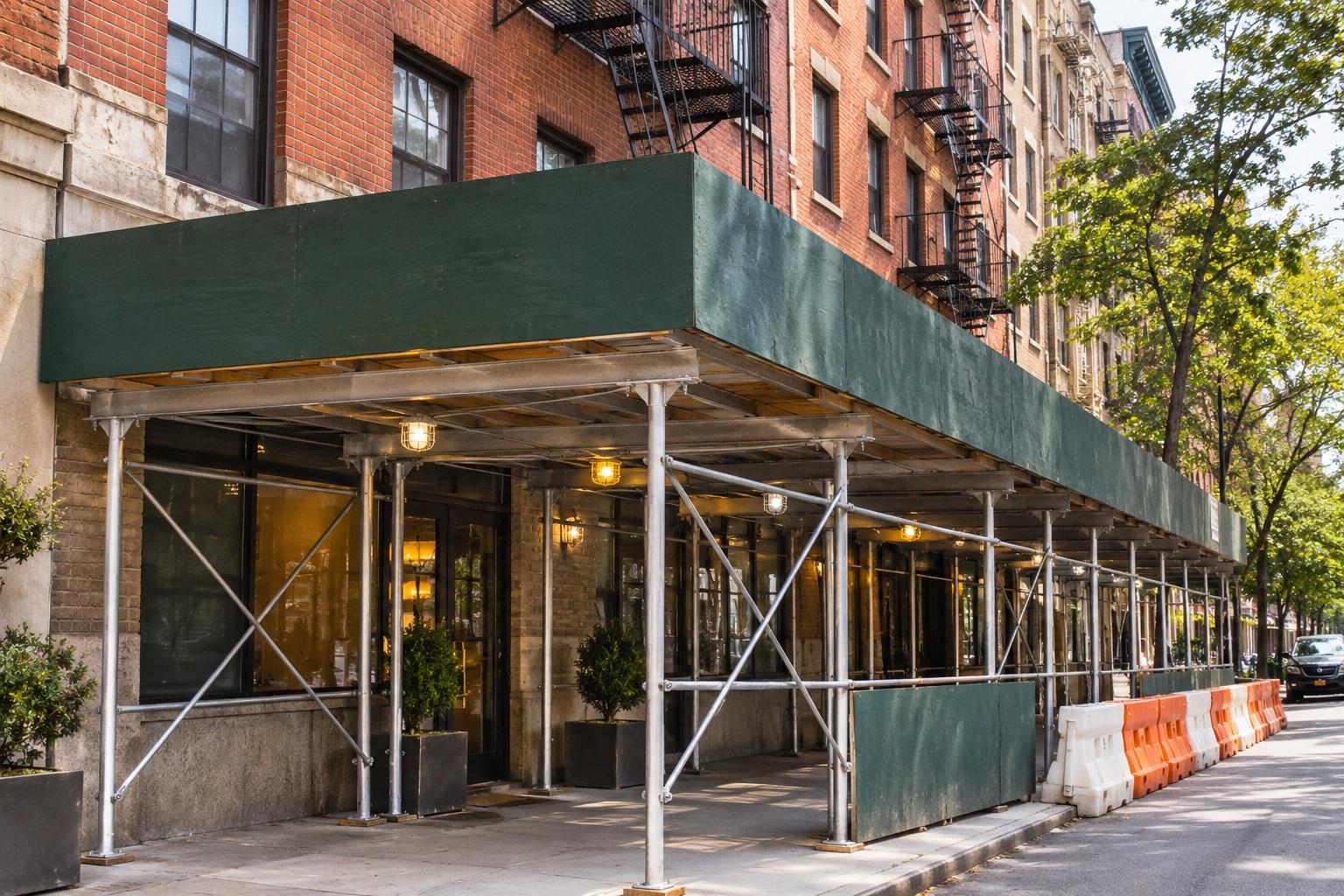
The stakes here are real but manageable. DOB penalties for late or non-filing generally accrue monthly — late facade filing under FISP, for example, carries a penalty in the range of $1,000 per month — which means a missed window isn't a one-time slap; it compounds the longer it goes unresolved. Add the potential liability of a facade or parapet condition left unaddressed, plus the cost of emergency remediation like sidewalk sheds, and the math clearly favors staying ahead. None of this is cause for panic. It's because of a system.
How to Figure Out Which Laws Apply to Your Building
Before you build a calendar, you need to know which clocks are even ticking for your property. A quick qualifier walkthrough:
- FISP / Local Law 11 generally applies to buildings taller than six stories. If you're under that threshold, FISP likely isn't your concern — but LL126 still might be.
- Local Law 126 parapet inspections apply to buildings with parapets that front a public right-of-way — sidewalks, streets, and other public spaces. Height isn't the trigger here; the parapet is.
- Local Law 97 and benchmarking generally cover buildings over roughly 25,000 square feet (with some multi-building and lot-based nuances). That same square-footage universe feeds Local Law 33 energy grades.
These are starting points, not rulings. Applicability — and the specific obligations that flow from it — depends on your individual building: its height, its footprint, its parapet configuration, and its filing history. Across the five boroughs, NYC's heavy stock of older, pre-war buildings adds another layer: aging construction tends to draw more scrutiny on the facade and parapet side. The honest answer for every owner is the same — verify applicability per building rather than assuming. Everything downstream depends on getting this first step right.
Local Law 126: Your Annual Parapet Inspection (The One That Recurs Every Year)
Of the four laws here, Local Law 126 is the one most likely to quietly lapse — precisely because it comes due every single year.
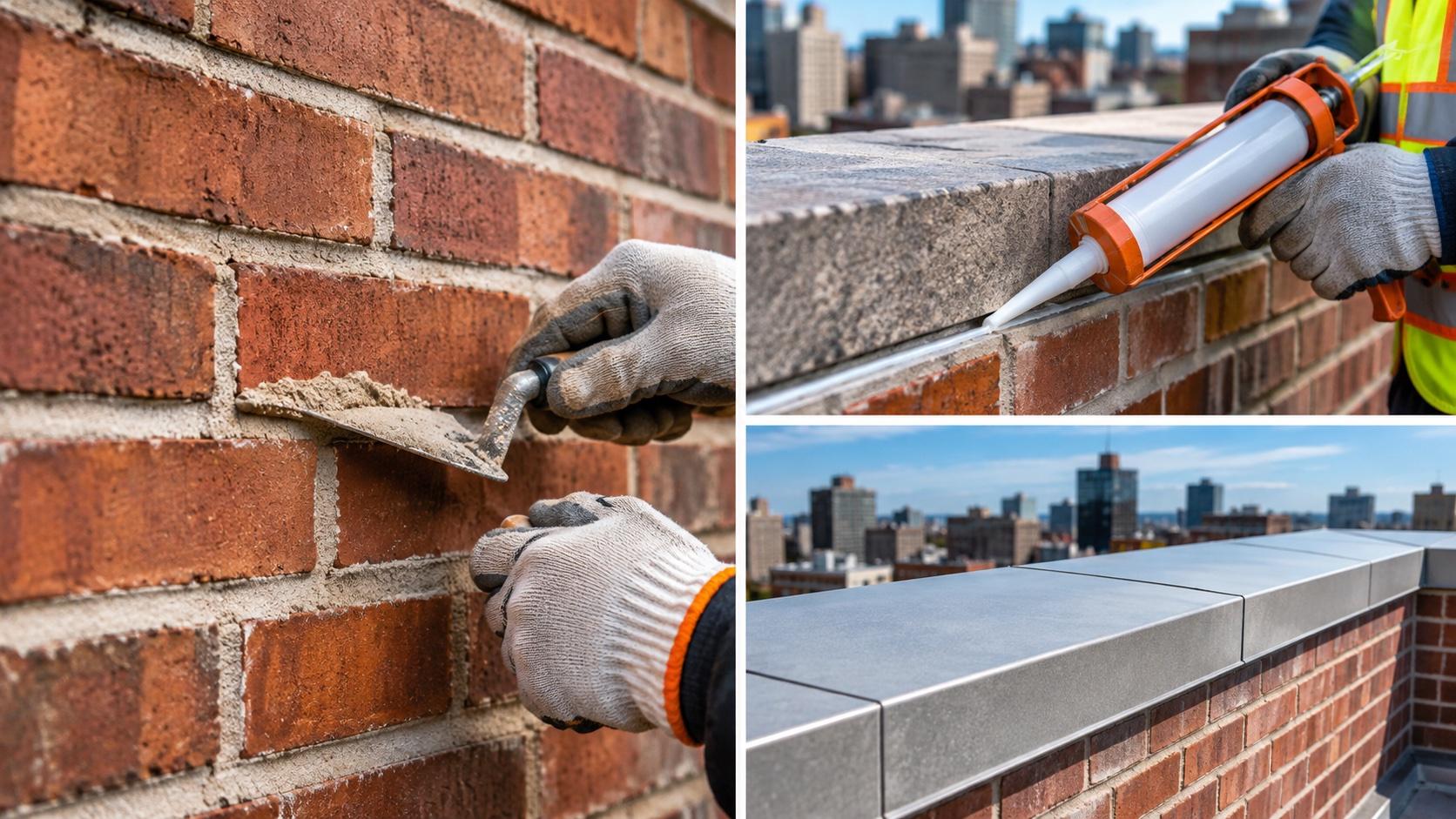
Under 1 RCNY §103-15 (the DOB rule that governs parapet observations), buildings with parapets fronting a public right-of-way must have those parapets observed annually by a qualified person. In NYC, where so much of the building stock is older and masonry-heavy, these walls are exactly where freeze-thaw cycles, deteriorating mortar, and rusted anchors tend to show up first. The annual cadence exists because parapet conditions can change fast, and a wall overlooking a public sidewalk is a pedestrian-safety matter, not a formality. (If you own older stock, our guide to parapet problems in pre-war NYC buildings covers what tends to go wrong and why.)
The observation produces a finding, the condition gets documented, and — critically — you're required to retain those records for six years. That retention requirement trips up a lot of owners who complete the inspection but never organize the paperwork in a way that holds up if the DOB asks.
Because LL126 recurs annually, it's the obligation most vulnerable to the "we did it last year, we're fine" assumption. You're never permanently done. Each year resets the clock.
Safe, SWARMP, or Unsafe — and Why the Timing Matters
Every LL126 parapet observation lands in one of three classifications, and the one you receive reshapes your calendar:
- Safe — no significant conditions requiring remediation. You're in good shape until next year's observation.
- SWARMP — "Safe With A Repair and Maintenance Program." The parapet is acceptable for now, but conditions exist that need to be addressed within a defined timeframe to keep it that way.
- Unsafe — a condition that poses a risk and triggers immediate legal obligations, including DOB notification and a repair clock (an Unsafe condition generally carries a 90-day window to correct, subject to the specifics of the finding).
An Unsafe finding is the one that can upend your planning, because it carries time-sensitive duties that don't wait for your convenience. The specifics of what you're classified as — and what you owe as a result — depend entirely on your building's actual condition, which is exactly why a professional observation matters. We go deeper on what each result means, and what to do next, in SWARMP vs. Unsafe: What a Parapet Report Says.
The practical takeaway: an annual item with potential safety consequences is not something to leave to chance or push to the end of a busy quarter. A licensed engineer or architect performing the observation — and delivering a fast, DOB-ready report — is what keeps this recurring obligation from slipping through the cracks.
FISP / Local Law 11: The 5-Year Facade Cycle (Don't Confuse It With LL126)
Here's where a lot of owners get tangled up. FISP — the Facade Inspection Safety Program, established under Local Law 11 — is a separate obligation from your annual parapet inspection, and confusing the two is one of the most common and costly mistakes in NYC compliance.
FISP applies to buildings taller than six stories and requires a comprehensive inspection of the entire exterior facade — not just the parapet, but the full building envelope (the complete outer shell of the building). And rather than running annually, it operates on a five-year cycle broken into staggered sub-cycles, with each building assigned a specific filing window.
The important thing to understand is how that window gets determined. Historically, FISP sub-cycles have been assigned in relation to building characteristics, and the DOB periodically updates the program's schedule and sub-cycle structure. That's exactly why we won't print a fixed date here and tell you it's yours — it very likely isn't. Instead, the right move is to look up your building's assigned sub-cycle and filing window directly, then confirm it against the DOB's current published schedule. Two buildings that look identical from the street can sit in entirely different sub-cycles with filing deadlines years apart.
Local Law 97: Annual Emissions Reporting for Larger Buildings
Local Law 97 shifts the conversation from the building's exterior to its carbon footprint, but it belongs on your compliance calendar all the same.
In plain English: LL97 generally covers buildings over roughly 25,000 square feet and requires annual reporting of the building's emissions measured against compliance-period limits. Those limits are structured to tighten over successive compliance periods, meaning the standard your building is judged against today isn't necessarily the one it'll face in the next period. The emissions report, however, recurs every year — making it another annual anchor alongside LL126, just governed by square footage rather than parapets.
The penalty exposure here works on two fronts. There can be consequences for emissions that exceed your building's limit, and there can be consequences for simply failing to file the report. Both tend to accrue and scale rather than arriving as a single fixed charge, which — as with the other laws — rewards staying ahead and punishes delay. We're deliberately not quoting universal fine figures, because the exposure depends on your building's size, its emissions profile, and the applicable compliance period.
What every covered owner should internalize is simply this: if your building is over the threshold, LL97 reporting is a recurring annual date you cannot let drift. Confirm whether your building is covered, and if it is, treat the reporting deadline with the same discipline you'd apply to any annual filing.
Local Law 33: Energy Grades & Benchmarking Posting
Local Law 33 is the one that puts your building's energy performance on public display — literally.
Here's the chain of events: covered buildings submit benchmarking data on their energy and water use. That data produces an energy efficiency score, which translates into a letter grade — the familiar A-through-F-style label. And that grade must be physically posted in a conspicuous spot near the building's public entrance, where tenants and passersby can see it.
LL33 draws from the same ~25,000-square-foot universe as LL97, so if your building is covered by one, there's a strong chance it's touched by the other. The two are connected through benchmarking: the data you report feeds both your emissions picture and your energy grade.
On timing, the posting obligation is cyclical and tied to when labels are issued — grades are generally expected to be posted near the entrance once the current round of labels becomes available. As with every other law here, the precise timing should be verified for your specific building against the current year's schedule rather than assumed. The posting requirement is easy to overlook precisely because it feels minor next to a facade filing — but a missing or outdated grade placard is still a compliance gap.
The Master Calendar: A Month-by-Month View
Now let's consolidate. Below is a framework for understanding where each obligation tends to fall across the year — a building owner compliance checklist in calendar form. Read it as a map of the types of deadlines and their rhythms, not as a fixed set of universal dates.
- Annual anchors (recur every year, timing building-specific):
- LL126 parapet observation — keyed to your building's own annual anniversary/cycle.
- LL97 emissions report — annual filing for covered buildings over the square-footage threshold.
- LL33 energy grade posting — recurs in connection with each round of issued labels.
- Cycle-dependent windows (not every year):
- FISP / Local Law 11 facade filing — lands once within your building's assigned five-year sub-cycle window.
- Event-triggered obligations (unpredictable, condition-driven):
- Unsafe findings — an Unsafe parapet or facade condition triggers DOB notification and a repair clock the moment it's identified, regardless of where you are in the calendar year.
A critical note — please read this carefully: the exact dates for all of the above depend on your specific building. Your FISP sub-cycle window is assigned; your LL126 anniversary is tied to your own prior inspection timing; your LL97 and LL33 obligations depend on your building being covered and on the current year's published schedule, which the DOB updates periodically. Do not treat any generic calendar — including this framework — as a list of fixed, universal deadlines. Its value is in teaching you the cycles so you can confirm your own dates with confidence.
How to Pin Down Your Building's Actual Dates
Turning the framework into real dates is a short, repeatable exercise:
- Confirm applicability. Check your building's height (6+ stories for FISP), square footage (~25,000 sq ft for LL97/LL33), and whether you have a parapet fronting a public right-of-way (LL126). This tells you which clocks apply.
- Look up your FISP sub-cycle window. Identify which sub-cycle your building is assigned to and the specific filing window within the current five-year cycle.
- Note your LL126 anniversary. Because it's annual, anchor it to the timing of your most recent parapet observation.
- Verify LL97 reporting and LL33 posting if your building is covered — confirm the reporting date and the posting timing for the current label round.
- Cross-check everything against the current year's published dates. Cycles and schedules get updated; your framework tells you what to look for, and the current-year snapshot tells you when.
Building a "Set It and Forget It" Compliance System
For a time-strapped owner, property manager, or co-op/condo board, the answer to this complexity isn't heroic vigilance — it's a system that does the remembering for you.
A sound compliance system has three pillars:
- Annual renewal reminders. For the recurring items (LL126, LL97, LL33), set reminders well ahead of each due date so scheduling never becomes a scramble.
- A centralized calendar keyed to each law's cycle. One place that holds your annual anchors and your FISP sub-cycle window, so overlapping obligations stop competing for your attention at the last minute.
- Organized six-year recordkeeping. LL126 alone requires six years of retained records. Centralizing this — rather than scattering reports across inboxes and filing cabinets — is what makes a DOB inquiry a non-event.
There's a strong practical case for consolidating the recurring annual item — your parapet inspection — with a single DOB-certified firm that handles the full loop: the inspection itself, a fast DOB-ready report, record retention, and the reminder for next year. That's the difference between chasing a report every spring and simply receiving it. It won't cover your FISP cycle or your emissions reporting, but it reliably takes the most frequently-lapsed obligation off your plate, year after year.
A Simple Owner's Checklist to Stay Ahead
Here's the whole system distilled into something you can act on today:
- Confirm which laws apply to your building (height, square footage, parapet).
- Note your LL126 annual anniversary and treat it as a yearly fixture.
- Look up your FISP sub-cycle window and mark the filing deadline.
- Verify LL97 reporting and LL33 posting if your building is covered.
- Set reminders 60–90 days ahead of each deadline — not on the day itself.
- Centralize six years of records in one accessible, organized place.
If you want a ready-made tool for the recurring annual item, our NYC Parapet Inspection Checklist (2026) walks you through exactly what to have in order before and after your LL126 observation.
Common Mistakes That Lead to Missed Deadlines
A handful of avoidable errors account for most missed NYC building compliance deadlines. Knowing them is enough to sidestep them:
- Assuming FISP covers the annual parapet obligation. It doesn't. These are separate laws on separate clocks, and completing one leaves the other entirely open.
- Waiting until "closer to the deadline." Inspection scheduling tightens as windows close, and the owners who wait are the ones who struggle to get on the calendar in time. Early action is cheaper and calmer.
- Relying on a super or handyman for a borderline condition. A competent person may be able to perform certain observations, but when a condition is borderline — or if a finding is later questioned by the DOB — a licensed engineer or architect gives you a far more defensible position.
- Letting an Unsafe finding's repair clock catch you off guard. An Unsafe designation starts a time-sensitive process the moment it's issued. Owners who haven't planned for the possibility end up reacting under pressure instead of managing it.
None of these are reasons to panic. Every one of them is solved by the same two things: a calendar and early action. The urgency is real, but it's entirely manageable.
The Bottom Line: One Calendar, Zero Surprises
The structural truth of NYC compliance is that the laws run on different clocks — LL126 every year, FISP every five, LL97 and LL33 on their own square-footage-driven cadences. That's why a well-run building can still get surprised. But it's also why the solution is so straightforward: a single master calendar, with reminders set 60–90 days ahead of each obligation, turns a tangle of overlapping NYC building compliance deadlines into a predictable annual routine.
That's the entire point of this guide — not to memorize dates, but to understand the cycles well enough to build a system that holds. When you do, compliance stops being a recurring source of anxiety and becomes background infrastructure. Just remember that this is general guidance, not legal advice; a professional inspection is how you turn it into decisions specific to your building.
VetraCheck exists to make the recurring piece effortless. Our NYC DOB-certified engineers and architects have completed thousands of inspections across all five boroughs, delivering fast, DOB-ready reports with proper Safe / SWARMP / Unsafe classification and six-year record retention handled for you.
Start With the Deadline Most Likely to Lapse
If you take one action from this post, make it this: anchor your calendar to the obligation that comes due every single year. Because LL126 recurs annually, your parapet inspection is the smartest starting point — get it scheduled, get your reminder set for next year, and build the rest of your calendar around that fixed annual point.
Ready to lock in the recurring item and take it off your worry list? Request a parapet inspection or quote and start your calendar with the deadline you can't afford to miss.
Official sources
- Parapets, NYC Department of Buildings
- Parapets: Frequently Asked Questions, NYC Department of Buildings
- 1 RCNY §103-15 (parapet observation rule), NYC Department of Buildings
- 1 RCNY §102-01 (penalty schedule), NYC Department of Buildings
Published by VetraCheck Inc., a New York City inspection firm. About VetraCheck
Keep reading
Need a Local Law 126 parapet inspection?
Licensed NYC engineers, dated photos, and a report in three to five business days, on file before December 31.
Parapet inspections in Manhattan, Brooklyn, Queens, The Bronx, Staten Island